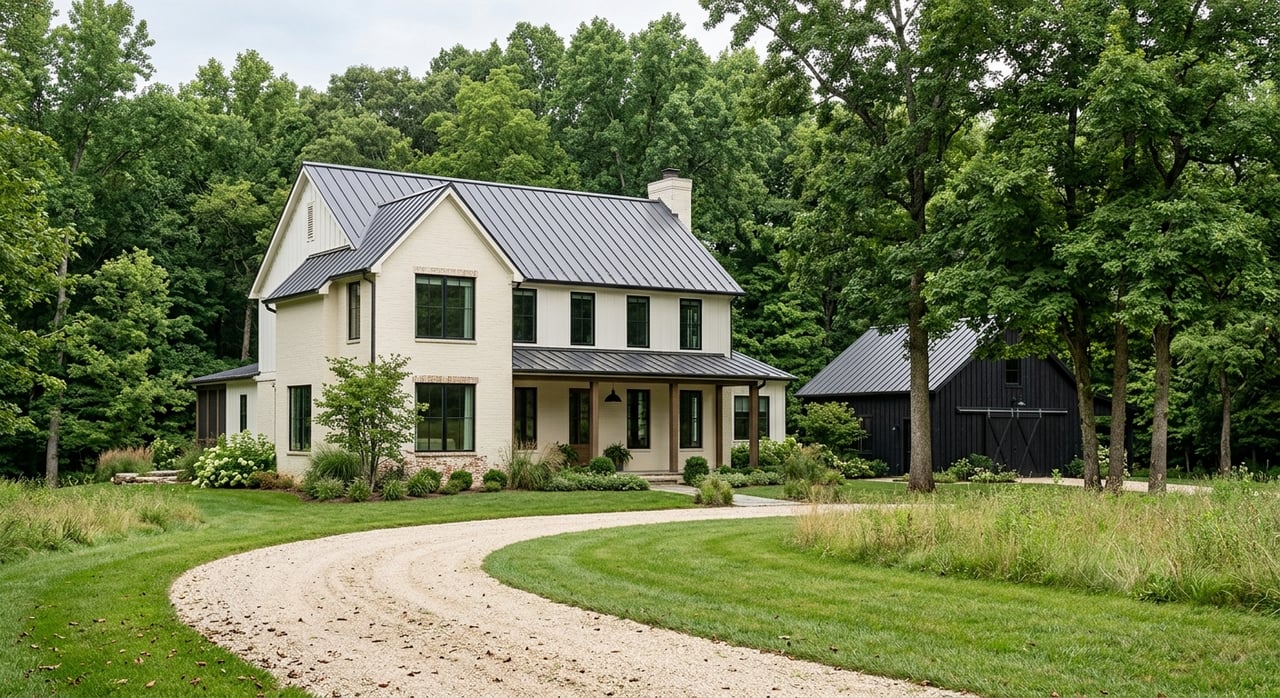
Your Guide to Wilson County Farm and Acreage Living
July 2, 2026
July 2, 2026
Looking for room to breathe without giving up access to Nashville? That is exactly why so many buyers are drawn to farm and acreage living in Wilson County. If you want open land, a slower pace, and the freedom that comes with a larger property, this area offers a practical mix of rural character and everyday convenience. Let’s dive in.
Wilson County sits in Middle Tennessee about 20 miles east of Nashville, which gives you a rare balance of space and connectivity. County planning materials note that I-40 runs through the county, I-840 begins here, and the WeGo Star commuter rail connects Lebanon to downtown Nashville.
That matters because acreage living here does not have to mean feeling cut off. You can enjoy a more rural setting while still staying connected to work, services, and entertainment across the region.
The county includes Lebanon, Mt. Juliet, and Watertown, with many residents living outside city limits. That setup creates a wide range of property types, from homesites with extra land to larger tracts suited for agricultural use, recreation, or long-term planning.
Wilson County’s long-range planning supports preserving rural land for agriculture, recreation, and low-density residential use. In simple terms, land ownership is part of the county’s bigger picture, not an afterthought.
County place-type materials reference categories such as Rural Countryside, Rural Crossroads, Rural Living, Large Lot Residential, and Green Space. As you search, you may notice that one parcel feels more like open countryside while another offers a blend of privacy and proximity to town.
This variety is one of Wilson County’s biggest strengths. You are not limited to one version of country living.
If you are hoping for a place where agriculture still has a real presence, Wilson County supports that identity in a visible way. The county maintains the James E. Ward Agriculture Center, a 267-acre agricultural and community campus with livestock and poultry barns, campgrounds, and event space.
That does not just add local character. It also reflects a county where agricultural land use remains part of everyday life and public infrastructure.
When you start looking for farm or acreage property in Wilson County, your search may naturally branch in a few directions:
Each area can offer a different experience in terms of access, parcel size, and future growth pressure. The right fit depends on how you plan to use the property now and later.
Buying acreage is different from buying in a typical subdivision. A beautiful tract can check every box at first glance, but the details behind the property often shape whether it truly fits your goals.
With land, you want to understand not only what is there today, but also what is allowed, what is available, and what may affect future use. That is where early due diligence becomes essential.
Wilson County’s zoning ordinance includes districts such as R-1 Rural Residential, R-2 Suburban Residential, A-1 Agricultural, and A-2 Agricultural Preservation. For many farm, hobby-farm, and acreage buyers, A-1 Agricultural is one of the most relevant designations because it is intended for uses typically conducted in agricultural areas along with rural-density residential uses.
That said, zoning is never something to assume. Two properties that look similar may have very different rules.
Before you move forward, confirm how the parcel is zoned and how that zoning aligns with your plans. If you are thinking about a barn, animals, a workshop, a second homesite, or a future split, those questions should be part of your first review.
Wilson County’s planning department handles rezoning requests, land subdivision proposals, site plan review, and GIS mapping. The county also requires a zoning compliance certificate before any building permit, and zoning permits are issued on-site.
This is one reason it helps to ask land-use questions early instead of waiting until closing is near. The more you understand upfront, the fewer surprises you are likely to face later.
The county GIS system can also be a very useful tool. It includes layers for parcels, zoning, city limits, water bodies, the urban growth boundary, future land use, and the major thoroughfare plan.
Utilities are never one-size-fits-all with acreage property. Service availability can vary from one tract to the next, even when properties are close together.
The Water and Wastewater Authority of Wilson County serves more rural parts of the county. Its sewer system also provides decentralized service for customers not served by Lebanon, Mt. Juliet, or Watertown.
That is helpful, but you still need parcel-specific answers. Before you buy, verify what water and wastewater options are available and what that means for your plans.
If a property will rely on septic, that review deserves immediate attention. Tennessee requires permits for installing, altering, extending, or repairing septic systems, and guidance says the septic permit should be obtained before dirt work or building-pad construction.
It is also important to know that accessory structures like garages, shops, and barns can affect septic design. If you are dreaming beyond the main house, make sure those ideas are part of the conversation from the beginning.
Wilson County also notes that it does not manage septic, electrical, step, or stormwater inspections itself. Those are handled through separate offices, which is another reason to build time and questions into your process.
Land can be beautiful and still come with drainage challenges. Flood-zone and water-flow questions belong near the top of your acreage checklist.
Wilson County directs buyers to its flood information resources and mapping tools, which can help you review flood-zone conditions early. That early review matters because drainage, buildable area, and site layout can all affect how usable a parcel really is.
Some buyers want acreage for immediate use. Others are also thinking about future flexibility, such as creating an additional homesite or splitting land later.
If that is part of your long-term plan, bring it up before closing. Wilson County’s planning review process can require surveys and certificate steps before a plat is recorded, so it is much easier to explore those questions before you buy than after.
If you are buying land in Wilson County, Greenbelt status may be an important part of the financial picture. Tennessee’s Greenbelt program values qualifying agricultural, forest, and open-space land based on present use rather than market value.
County guidance says agricultural land generally must be at least 15 acres, forest land generally must be at least 15 acres, and open-space land generally must be at least 3 acres. The homesite itself is assessed at market value.
For wooded acreage, forest land may qualify if it is at least 15 acres and managed under a sustained-yield program, with a forest management plan required for enrollment. Wilson County also states that current-year Greenbelt applications must be completed by March 1.
This can be meaningful for long-term ownership costs, but it is important to verify eligibility and not make assumptions. If Greenbelt status is lost, rollback taxes can apply for three years on agricultural and forest land and five years on open-space land.
Acreage living in Wilson County is not only about the property line. It is also about how that land fits your daily life.
Countywide indicators show a 77.0% owner-occupied housing rate, a median home value of $428,000, a median household income of $95,839, an average commute of 30.1 minutes, and broadband subscriptions in 93.6% of households. Those numbers help paint a picture of a county where many people put down roots while staying connected to work and modern services.
The county profile also points to 22 public schools, five high schools, and Cumberland University in Lebanon. For many buyers, that blend of rural settings and access to town services is part of what makes Wilson County so appealing.
If you want land without giving up regional access, Wilson County deserves a close look. Its planning framework supports rural preservation, its transportation links keep you connected, and its range of property types gives you options that are hard to find closer to the urban core.
The key is buying with a clear strategy. The right acreage property is not just the one with the prettiest view. It is the one that matches your goals for access, utilities, zoning, future use, and long-term cost.
When you approach the search thoughtfully, Wilson County can offer the space, flexibility, and lifestyle many buyers are chasing in Middle Tennessee.
If you are considering farm or acreage living in Wilson County, Kari Powell can help you sort through the details, identify the right opportunities, and move forward with clear local guidance.
Stay up to date on the latest real estate trends.


Get assistance in determining current property value, crafting a competitive offer, writing and negotiating a contract, and much more. Contact me today.